Posts

Showing posts with the label Liver Problems

Liver Transplant in the current Lockdown caused by COVID-19 Pandemic

Image
All patients who are  suffering from liver disease  and need a transplant are currently in dilemma on when and how the transplant would proceed. Even doctors are in dilemma on whether they should divert the healthcare staff and infrastructure to transplant when we have a great pandemic going on. To answer these queries, the American, European, Asian and Indian societies have drawn out guidelines for doctors to help in decision making. Should we as healthcare providers decide on who is more in need of limited resources, i.e., COVID-19 patients versus patients in  urgent need of liver transplantation?  It is impossible to weigh the value of the life of a patient with COVID-19 against that of a patient in need of life-saving liver transplantation. We should not compound the pandemic by risking the lives of patients in need of liver transplantation and our goal should be to ensure that an ICU bed is available for every patient who requires one. All centers offeri...

Cirrhosis of Liver

Image
What do you mean by cirrhosis of liver? In medical terms cirrhosis is diffuse irreversible damage to liver parenchyma. In the current era, it is irreversible. That means that the damage to the liver has crossed the point of no return. Although, you can remain stable with cirrhosis, you cannot cure or reverse cirrhosis of liver.  Under normal circumstances, liver is smooth and soft to touch. In cirrhosis your liver becomes hard and irregular and rough. In simple terms, it means, your liver is damaged. How does cirrhosis affect your body? Liver performs more than 500 functions. So when you develop cirrhosis, these functions start decreasing. Some of these functions include cleaning of toxic byproducts of your body, metabolizing all the food that you eat, storing important vitamins and even forming proteins necessary for life. Besides, all the blood from your tummy (including from your intestines), drain through the liver into the heart. In cirrhosis this draina...

Liver Involvement in COVID-19

Image
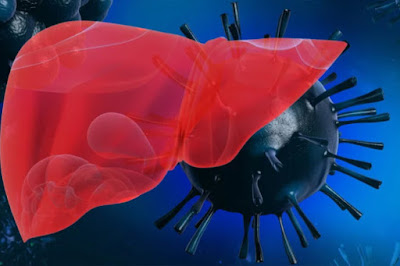
Covid-19 is a disease caused by a novel type of coronavirus now termed as SARS-CoV-2. The virus originated from Wuhan, #China and has now spread throughout the world now responsible for more than 50,000 deaths worldwide. The disease is primarily responsible for causing lung injury and acute respiratory distress syndrome or ARDS. In the 1.4 million cases noted so far # liver  involvement is also seen. The cells of the bile duct contain the same receptors as the ones present in lung by which the virus causes lung damage. Theoretically, it was expected to cause damage by the same mechanism – ACE2 receptors. However, practically we have not noted significant liver injury. No case of #LiverFailure caused by the virus per se is noted. There is rise in transaminases and non-specific abnormalities are noted in # LiverFunctionTests   or # LiverProfile . Most studies have found elevation of AST and total bilirubin similar to injury caused by other non hepatotrophic viruses. Initia...

Ascites

Image
Water gets accumulated in your tummy (abdomen) as a part of a disease. It is known medically as Ascites. Most common reason for ascites is Liver Disease. Although, local disease of tummy (Peritoneum), Kidney, Heart can cause water accumulation in your tummy, by far the most important reason is Liver. If there is water in your tummy there is 85% chance that you have Liver Disease. What causes Ascites? There are many causes, but the most common are mentioned here Liver Disease, Cirrhosis, Liver Cancer, Liver Failure Cancer Malignancy Kidney Disease Heart Disease Infections Tuberculosis What are the symptoms of Ascites? As the fluid gets collected very gradually, you may realize it only after weeks that you are having symptoms of Ascites Heaviness of stomach Distension of stomach Bloating Appetite getting lower (Tummy feel full all the time) Breathlessness Swelling of feet may accompany How can we diagnose Ascites? Ultrasound – Even before you realize it, a ...

The Best Way To LIVER BIOPSY

Image
Liver biopsy is a procedure where a small piece of your liver tissue is obtained and sent for examination. Not all patients with liver disease warrant Liver Biopsy. Your Liver Specialist or Hepatologist will look at your disease course – history and clinical examination, blood reports including  Liver Function Tests  and reports for  HepatitisB ,  HepatitisC ,  Wilson’s Disease ,  Autoimmune Hepatitis  and then take a decision on need for  liver biopsy . Why does Hepatologist advice Liver Biopsy? Reason for abnormal liver tests (Diagnose) Determine the stage of your liver disease (Stage) Determine the severity of your liver disease (Grade) Decide on need and success of the treatment (Treatment) If there is any suspected tumour in the liver (HCC Hepatocellular Carcinoma Liver Tumour) Unknown reason of fever Is there different ways to carry out liver biopsy? Most common is via Ultrasound (Sonography) guided biopsy through the skin ...

Liver Disease in Gujarat

Image
There is a myth that because alcohol is banned in Gujarat, there is no  liver disease in Gujarat . Though, alcohol is one of the major reasons for liver failure, there are many other diseases which one needs to be aware of. The most common cause of  liver failure in India  is  Hepatitis B . The most common cause of liver cancer is Hepatitis B. Those who were born before 2002 need to check themselves for hepatitis B. vaccination is available and is now a part of national immunization schedule. Hepatitis B has no symptoms and the only way to diagnose is a simple blood test. If you have received blood transfusion in past, you have the risk of being exposed to  Hepatitis C . The diet in Gujarat is full of sugars and oils. With adaption of western sedentary lifestyle, obesity and diabetes is on the rise. With that fatty liver is also on the rise.  Fatty liver  can cause liver damage similar to that caused by alcohol. Fatty liver is worldwide becom...

Is Fatty Liver a LIVER PROBLEM?

Image
The answer is yes and no. It indeed is a liver problem and it indicated that there is fat accumulated in your liver. However, it is not just a  liver problem  and it is one of the manifestations of a complete metabolic problem. Liver is a store house. Whatever we eat, the excess amount is converted to fat and is stored in the liver. If on a daily basis, we have a positive balance between calories we eat and calories we burn, the difference is converted to fat and stored in the liver. Over a period of time the fat accumulated to such a great extent that it starts damaging your liver cells and they start dying. This is the time when your liver function tests start becoming abnormal. If no corrective action is taken at that moment, the liver tries healing itself with abnormal fibrosis and eventually it becomes cirrhosis. Once cirrhosis happens, it is irreversible and can then lead to all complications like blood in vomit, blood in stools, abnormal behavior, fluid accumula...

Is your Lifestyle Destroying your Liver?

Image
Liver  as you all know it, is not only the second largest organ of the body after skin, but also a major organ for metabolizing. Whatever we eat goes to liver before reaching anywhere else in the body. The liver stores the excess energy as fat and condensed glucose known as glycogen. So whenever we eat excessively, the energy is stored in liver as fat. If we continue to do so for months and years together, the liver starts accumulating fat and enlarges in size. A point comes when liver no longer can take it and starts undergoing destruction. What is Fatty Liver? Whenever the fat accumulation in liver crosses 5% of liver weight it is known as fatty liver. Though in last century alcohol was believed to be the major cause of fatty liver, the diet and lifestyle is rapidly becoming the major cause of fatty liver now. The disease is known as non alcoholic fatty liver disease or NAFLD. Once it starts destroying liver it is called as steatohepatitis or NASH. Who is likely to ha...

Blood in Stools? It can be Symptom of Ulcerative Colitis

Image
Blood in stools is a common symptom. Many of the individuals face it once in a while. But if it is a recurrent symptom, Ulcerative colitis is a  disease  that needs to be ruled out. Intestine is divided into two main parts- small and large. Large intestine is the last one metre of the intestine which helps not only in forming stools but also storing it till the time we evacuate during our routine defecation. What is Ulcerative Colitis? It is a type of disease where the last part of our intestine gets damaged by our own immune cells and is a type of Inflammatory Bowel Disease or in common terms, IBD. The other types of IBD are Crohn’s Disease and Microscopic Colitis. In ulcerative colitis, the lining of the large intestine gets damaged and ulcerated. Once it gets ulcerated it starts oozing blood. Who is likely to have it? Ulcerative colitis is common among young individuals of both the sexes, though, no age is protected from it. The exact cause of ulcerative colitis...